
 English
 русский
 Deutsch
 Español

News
Home / News / Industry News / How Many Air Movers Per Square Foot? IICRC S500 Guide for Water Damage
Content
Every water damage job begins with a simple question: how many air movers per square foot do I need? Get the number right, and floors dry quickly, mold risk drops, and the insurance paperwork becomes much smoother. Get it wrong, and you may be leaving money on the table or, worse, leaving a wall wet for days. This guide breaks down the industry standard into an easy-to-follow work plan that you can apply on the next mitigation project.
Based on the IICRC S500 guideline, the working rule is to place one air mover for every 50 to 70 square feet of wet floor in each affected room. On top of that, add one air mover for the room itself, plus one more for every 100-150 square feet of wet wall or ceiling area. For hard surface flooring, some contractors use a more generous range of one unit per 400-500 square feet, but the 50-70 sq ft rule remains the most recognized starting point for carpet and padded flooring.
| Wet floor area (sq ft) | High-end count (per 50 sq ft) | Low-end count (per 70 sq ft) |
|---|---|---|
| 500 | 10 | 8 |
| 1,000 | 20 | 15 |
| 1,500 | 30 | 22 |
Using the IICRC formula is more accurate than guessing. Here is the step-by-step process we use when helping customers spec equipment for restoration jobs.
Every room with any wet material needs one base air mover, even if the wet area is small. This is the “room factor” that quick calculators often forget. A 100 sq ft bathroom and a 1,000 sq ft living room both get at least one mover, then the additional movers are added by area.
Divide the wet floor square footage by 50 to get the high-end number and by 70 to get the low-end number. For example, a 600 sq ft wet floor needs between 9 and 12 movers just for the floor: 600 / 50 = 12, and 600 / 70 is about 9.
Each 100-150 sq ft of affected wall or ceiling adds another unit. If the wall cavity itself is wet, you may need to cut injection holes and position air movers to push air into the cavity. Some contractors use the linear wall calculation at one mover per 12 linear feet of wet wall, which works for high wall sections.
Add the room movers, the floor movers, and the wall movers together. Round up to the next whole number, then review the layout on site. The result is a practical starting range, not a fixed requirement.
The 50-70 sq ft guideline works well for typical residential rooms, but several conditions can move the final count up or down.
Higher ceilings and long narrow rooms require more attention. An air mover still needs enough velocity at floor level, so if the ceiling is above 9 feet, aim for the tighter end of the range, roughly one mover per 40-50 square feet.
Class 4 drying, where moisture has penetrated deeply into stone, hardwood, or concrete, requires more airflow than a simple carpet dry. Carpet and pad can tolerate the 70 sq ft end of the range, while dense materials will benefit from the higher count.
An air mover only performs when it is aimed correctly. Place units at 10-12 foot intervals along the wet wall, angled at 45 degrees to create a circular airflow pattern. With good placement, you may save one or two movers per room. If you are new to this part of the process, our article on optimizing air mover placement can help you fine-tune the arrangement.
Let's walk through a realistic example. Imagine a 500 sq ft living room connected to a 200 sq ft hallway. The living room has 150 sq ft of wet wall; the hallway has 50 sq ft of wet wall.
This example shows why the simple question “how many air movers per square foot” hides a lot of onsite judgment. Start with the formula, then trust your moisture meter and adjust as drying progresses.
Even experienced technicians sometimes fall into a few traps. Here are the mistakes we see most often on job sites.
These small oversights usually mean a longer drying time and a higher risk of callbacks. A few minutes of careful calculation saves you days of extra work.
Once you know the count, the next step is choosing an air mover that can deliver the required airflow efficiently. Not every machine performs the same, and airflow characteristics matter as much as total CFM. The right model should match the surface you're drying and the space you're working in.
From our own factory experience, we have seen that a lightweight carpet dryer with a stable grill design performs best on floors, while a high-volume axial fan is better for pushing air across a large open area. It isn't about the most expensive unit; it's about matching airflow patterns to the job.
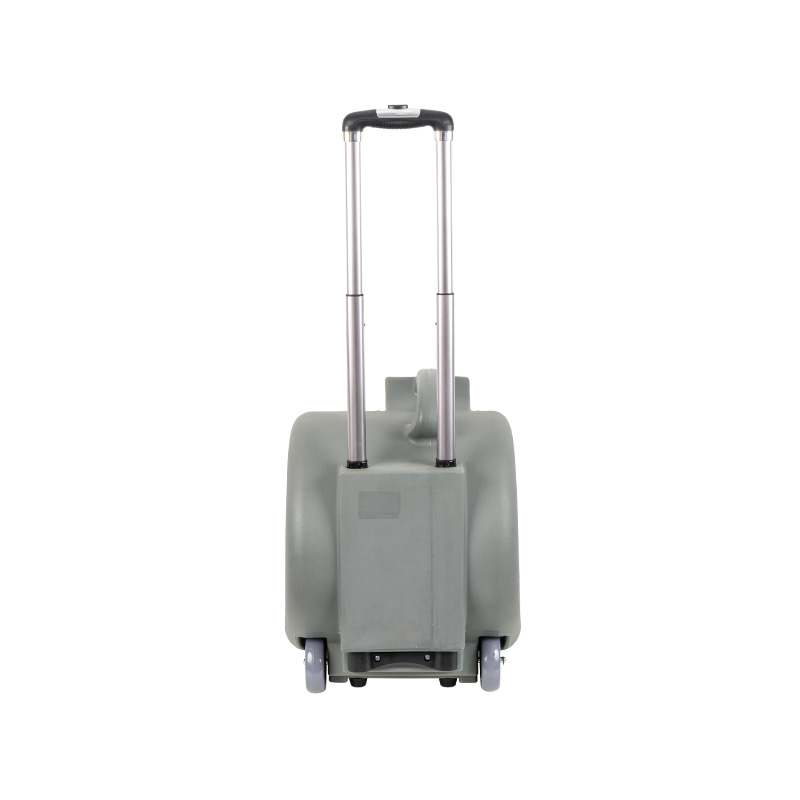 AMA01 Hot and Cold Carpet Drying FanThis versatile unit offers both warm and ambient airflow, making it ideal for speeding up evaporation in slow-drying conditions while remaining suitable for everyday water damage work.View Product →
Our AMA01 hot-and-cold carpet drying fan is a flexible choice for technicians who want both warm and ambient airflow during structure drying. The cold air mode is ideal for everyday water damage, while the warm air option gives you extra evaporation when conditions are slow.
 AMA05 Lightweight Compact Carpet DryerThis portable, low-profile dryer is easy to carry and fits into tight spaces under cabinets, while its adjustable angles help maintain effective airflow in narrow passages.View Product →
For tight spaces and smaller crews, the AMA05 lightweight compact carpet dryer is easy to carry from room to room without sacrificing placement angles. Its low profile also makes it easier to fit under cabinets or in narrow passages where larger units lose the airflow pattern.
 AMB01 High Air Volume Thin Carpet DryerWith a powerful 1800 CFM airflow in a slim design, this unit covers large floor areas efficiently while staying out of the way for commercial-scale drying jobs.View Product →
When volume is the priority, the AMB01 high-air-volume thin carpet dryer pushes a wide blanket of air across large floor areas. Its slim profile keeps the unit out of the way while still moving enough cubic feet per minute to handle commercial-scale jobs.
Calculating how many air movers per square foot you need is only the first half of a successful restoration project. The second half is choosing equipment that can sustain the right airflow for the duration of the job. Keep the IICRC ranges in mind, adjust for material and layout, and always verify with a moisture meter before you pull the last machine.
If you are planning your next equipment purchase, take a look at our air mover lineup to see models that can support your daily drying work. And if you have a project that needs a specific CFM range or a particular shape, our team is happy to talk through the options.
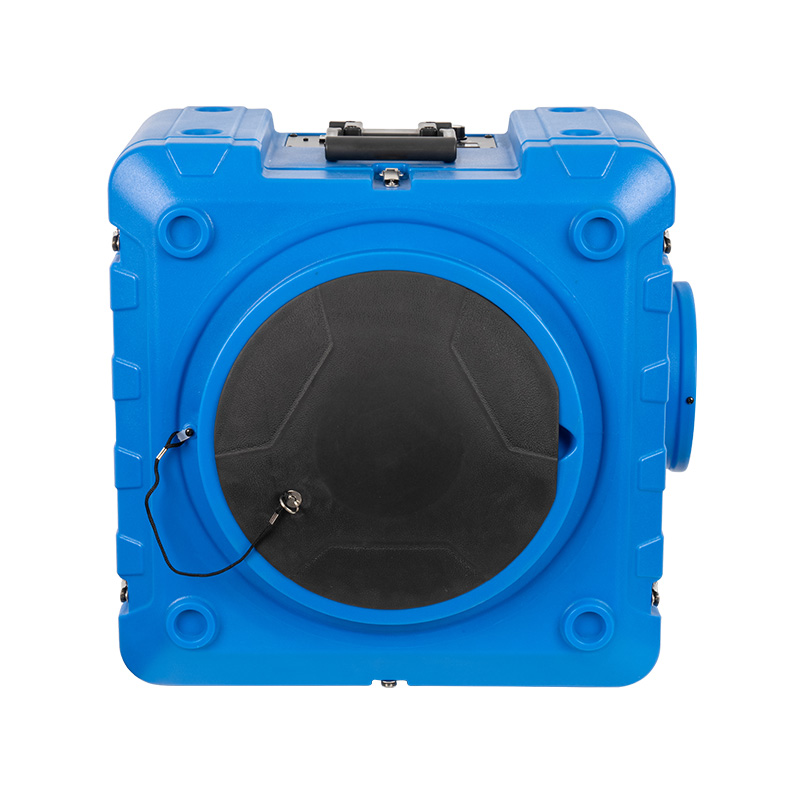
Three-Stage Filtration: The air scrubber features a three-stage filtration system that includes a pre-filter (MERV-10), carbon filter, and H13 HEPA filter. It effectively removes dust, pollen, smoke, ...
See Details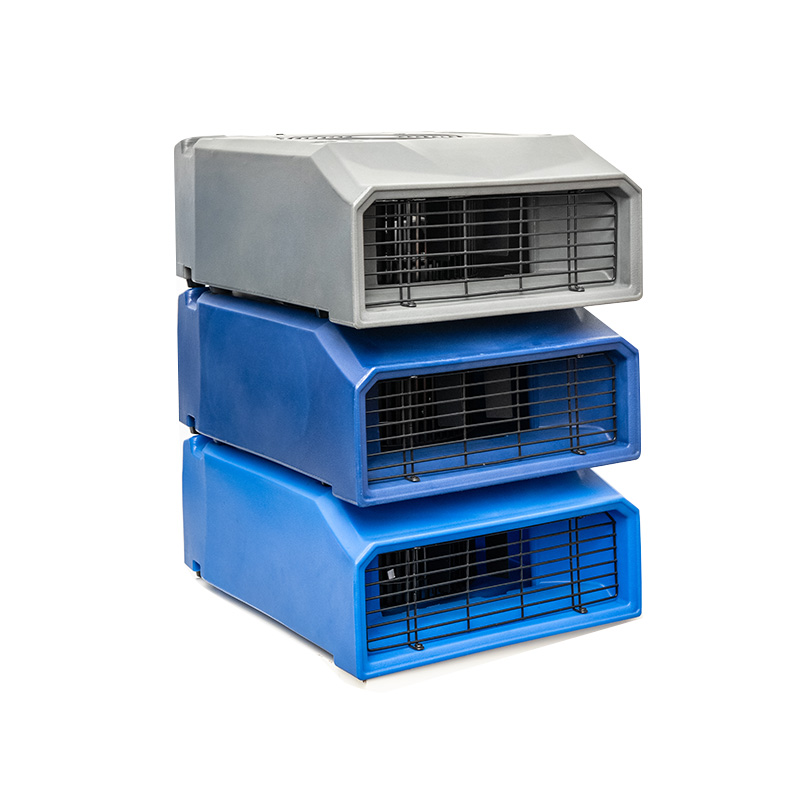
The AM-B01 High Air Volume Thin Carpet Dryers are equipped with a powerful motor that generates a high volume of airflow to ensure that your carpet dries thoroughly and quickly. This high air volume n...
See Details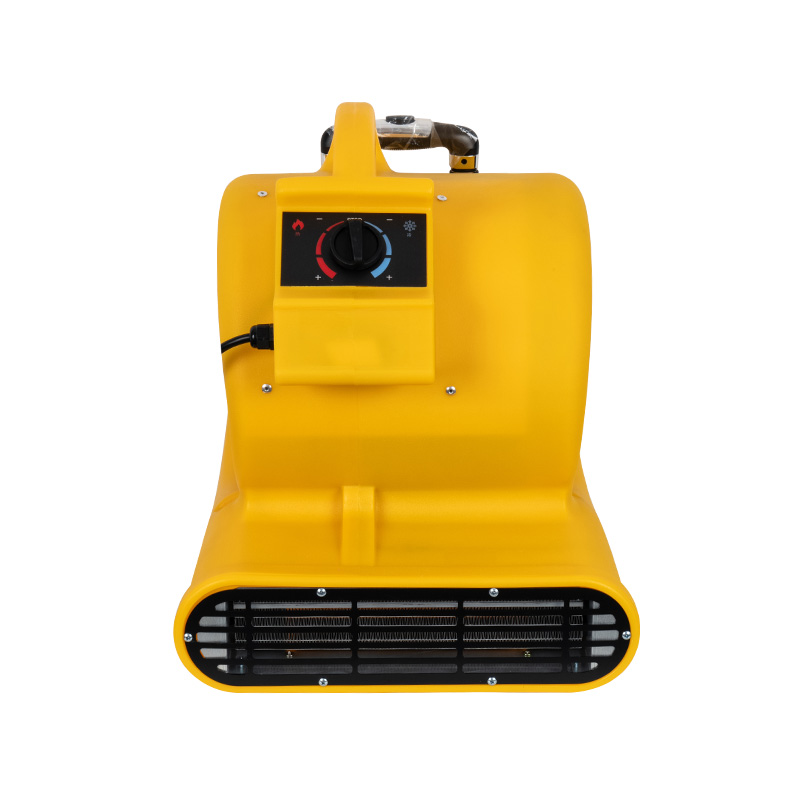
The AM-A01 Hot and Cold Carpet Drying Fans are versatile units designed to speed up the carpet drying process by utilizing hot and cold air. Combining the benefits of hot and cold air circulation, the...
See Details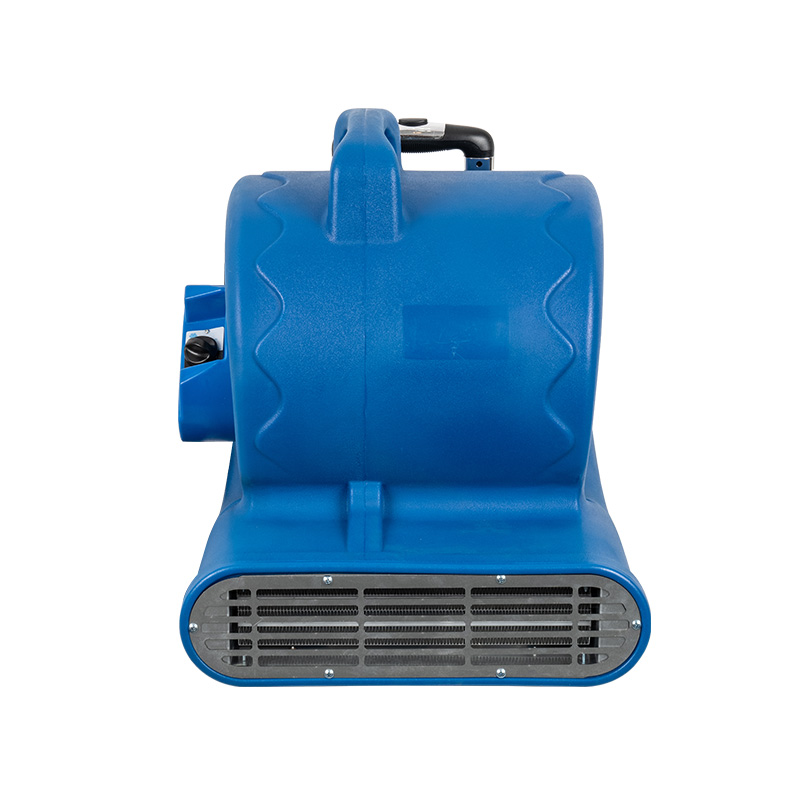
AM-A02 Multi-wing Centrifugal Wind Wheel Carpet Dryers effectively increase wind power and airflow for faster and more efficient carpet drying through the use of multi-wing centrifugal wind wheel tech...
See Details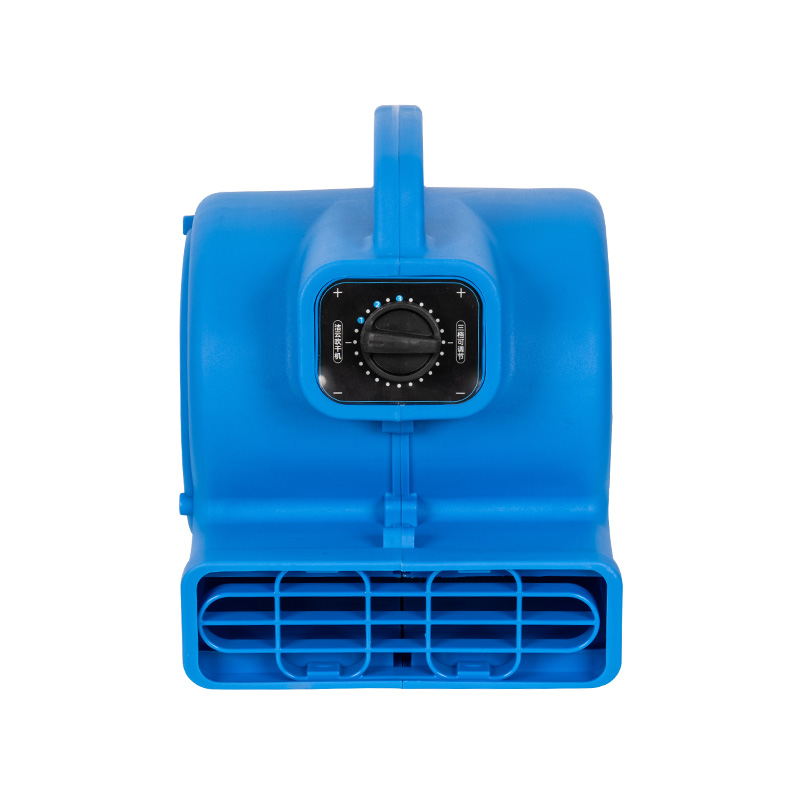
The AM-A03 Small Axial Floor Carpet Dryer is a highly efficient and versatile drying unit with a centrifugal air mover for faster surface drying. Not only is it suitable for drying carpets, floors, fu...
See Details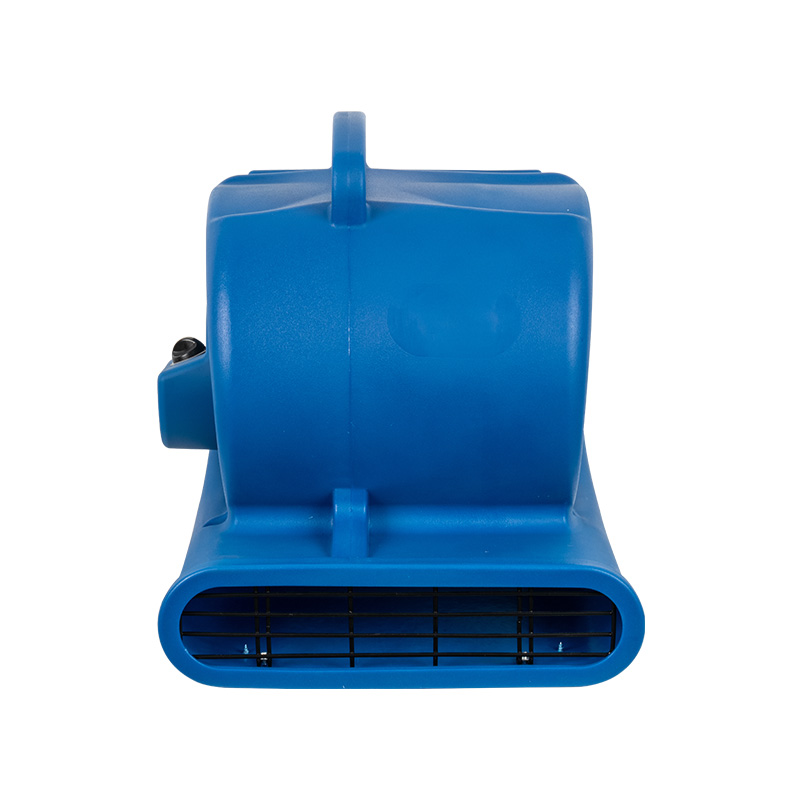
The AM-A04 Lightweight Portable Carpet Wall Floor Dryer features advanced centrifugal air movement technology for faster surface drying results. Not only is it suitable for a wide range of carpet, flo...
See DetailsStore Information
No. 88, Yuexin Road, Sanjiang Street, Shengzhou City, Shaoxing City, Zhejiang Province, China
+86-13819532379
Links
Products
Mobile Terminal
