
 English
 русский
 Deutsch
 Español

News
Home / News / Industry News / How to Add a Dehumidifier to Your HVAC System: Methods, Ducting, and Setup Tips
Content
If your air conditioner runs all afternoon and the house still sits at 60% relative humidity, adding more cooling capacity will not fix it — moisture is a separate problem that needs dedicated equipment. The proven way to add a dehumidifier to an HVAC system is to duct it in: draw air from the return side, remove water on the unit's coil, and send dried air back through the supply plenum so the existing blower distributes it to every room. Done correctly, the home holds a steady 45-50% RH in every season, the air conditioner cycles less, and musty odors stop returning. Done carelessly, the same project leaves you with an overflowing drain pan and a unit that never reaches setpoint. The sections below cover the four ducting layouts used in real installations, correct sizing, and the details that decide whether the project works.
Air conditioning does dehumidify — the water dripping from an evaporator coil is moisture leaving the air — but that removal is a byproduct of cooling, not a controlled function. Three everyday situations expose the gap:
A ducted dehumidifier closes that gap because it answers to its own humidistat rather than the thermostat. When indoor RH drifts past setpoint, it starts and pulls the air back down, whether or not the air conditioner has run that day.
Every professional installation falls into one of four layouts, and the difference comes down to two questions: where does the unit draw air from, and where does the dried air go? Decide the layout before buying, because it drives ducting materials, cabinet location, and total cost.
The dehumidifier gets its own return grille in a central living area and its own short supply duct, entirely separate from the HVAC duct system. It conditions air in a dedicated loop and never touches the air handler's static pressure, so its airflow stays exactly what the manufacturer designed. Contractors generally rank this the best-performing layout; the cost is extra ductwork and a second pair of grilles.
Here the unit draws air through a dedicated return and injects dried air downstream into the supply plenum, letting the air handler's blower carry it through the existing trunk and branches. Most contractors treat this as best practice for whole-house retrofits: a fixed draw point keeps airflow predictable, and supply-side injection pushes conditioned air to every register. Verify the unit's external static pressure rating against the duct design before committing.
A simpler retrofit: the dehumidifier still pulls from its own return grille but discharges into the return trunk upstream of the air handler, so dried air is recirculated by the system blower. It saves sheet metal and fits cramped mechanical rooms, at the cost of slightly less direct distribution and one extra pass through the cooling coil.
In a bypass setup the dehumidifier bridges the return and supply sides, and the HVAC blower itself pushes air across the dehumidifying coil. Material cost is lowest and no second fan is required, but moisture is only removed while the air handler runs, and the added resistance loads the blower motor. It suits budget-driven installs where the fan already runs long hours.
| Layout | Air path | Best suited to | Main trade-off |
|---|---|---|---|
| Independent ducting | Own return grille and own supply duct, separate from the HVAC system | New construction and whole-building humidity control | Most ductwork and material cost |
| Dedicated return to supply plenum | Draws from a dedicated return, discharges dry air into the supply plenum | Whole-house retrofits with plenum access | Static pressure and blower compatibility must be verified |
| Tied into existing return | Dedicated return, discharge into the return trunk | Tight budgets and compact mechanical spaces | Less direct distribution between rooms |
| Bypass | HVAC blower pulls air across the dehumidifier between return and supply | Low-cost installs where the fan already runs long hours | Works only when the air handler runs; adds resistance |
Whichever layout you choose, the cabinet itself must be built for ducted use — a portable unit designed for open rooms will not tolerate duct static pressure.
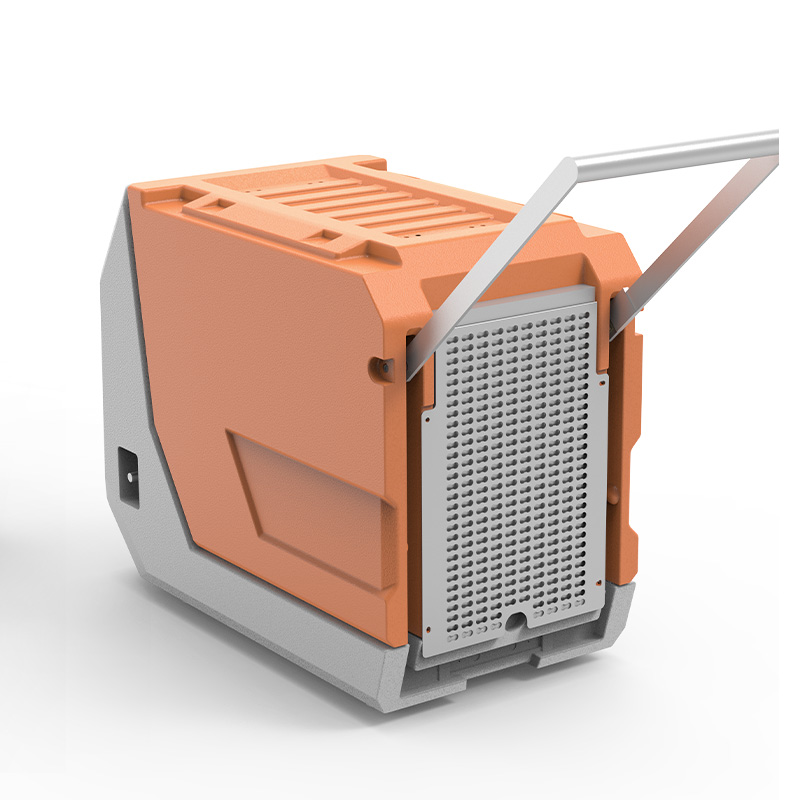 DEH-B01 Large Capacity Ceiling-Mounted Duct DehumidifierThis ceiling-mounted duct dehumidifier connects to ductwork on both sides and installs in a ceiling void or plant room, delivering whole-home dehumidification while keeping the bulky unit out of living spaces.View Product →
The DEHB01 large-capacity ceiling-mounted duct dehumidifier is designed for exactly this role: it hangs in a ceiling void or plant room, connects to ductwork on both sides, and keeps its bulk out of the living space.
Dehumidifier capacity is rated in pints of water removed per day, measured under standardized test conditions of around 80°F and 60% RH. Undersizing shows up immediately: the unit runs continuously on humid days and never reaches setpoint. Mild oversizing is harmless because the humidistat simply cycles it, so when two sizes straddle your estimate, take the larger one.
Estimate the load from three inputs: conditioned square footage, how damp the space really is (a basement with condensation on the windows is a heavier load than a slightly humid bedroom floor), and whether the unit will also dry outdoor ventilation air. Whole-house units for a typical single-family home commonly land in the 70-to-130-pint class once real-world conditions are counted, but the honest method is to work from the manufacturer's sizing table rather than a single rule of thumb. Our standing dehumidifier sizing guide walks through the calculation step by step.
The layout gets the attention, but most service callbacks come from drainage, access, and wiring. Cover these five points before the cabinet goes in:
Long discharge runs and distant branches sometimes need help so dried air actually reaches far rooms. Inline duct fans provide that boost without overdriving the dehumidifier's own blower.
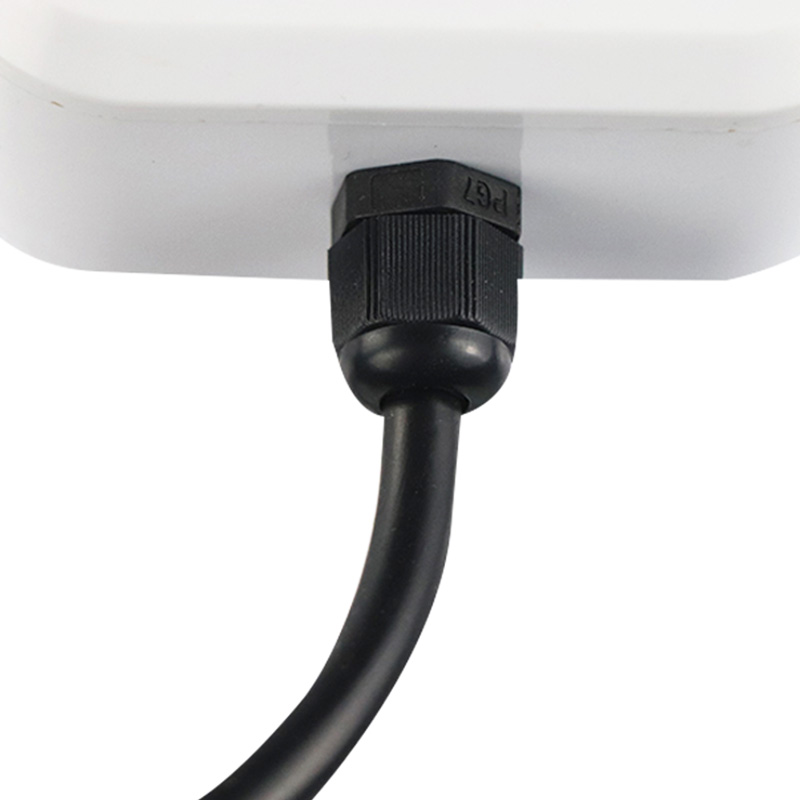 DUF-A02 Duct Fan With Temperature and Humidity ControllerAn inline duct fan that boosts airflow on long duct runs so dried air reaches distant rooms, with a built-in temperature and humidity controller that moves air only when conditions require it.View Product →
The DUFA02 duct fan ships with a built-in temperature and humidity controller, so the boost reacts to the same moisture signal the dehumidifier uses and only moves air when conditions call for it.
Integration is not always the right answer. When the moisture problem is confined to one basement, a sealed storage room, or a workshop, ducting into the central system spends money on distribution you do not need. A portable unit placed in the problem room, drained to a nearby floor drain or pump, and set to hold the same 45-50% band gets the result for a fraction of the installation cost.
For spaces that are too large for a household machine but still do not justify ducting — small warehouses, gyms, garages used as workshops — the DEHB03 multifunction industrial portable dehumidifier bridges the gap with continuous drainage, wheel-mounted mobility, and capacity sized for heavier loads.
Before committing to a layout, work through this list:
The whole project rests on one principle: remove moisture with a dedicated, humidity-controlled machine and let the HVAC system do what it does best — move and temper air. Get the layout, sizing, and drainage right, and the building holds a stable humidity band in every room without anyone touching a thermostat. To compare ducted and portable hardware side by side, browse our full dehumidifier range and matching air movement equipment.
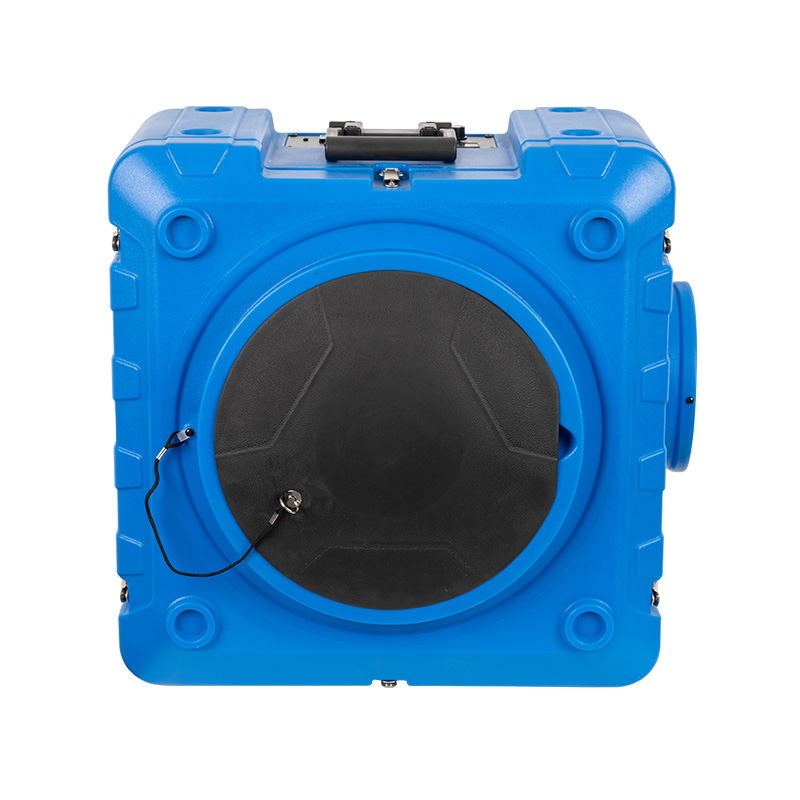
Three-Stage Filtration: The air scrubber features a three-stage filtration system that includes a pre-filter (MERV-10), carbon filter, and H13 HEPA filter. It effectively removes dust, pollen, smoke, ...
See Details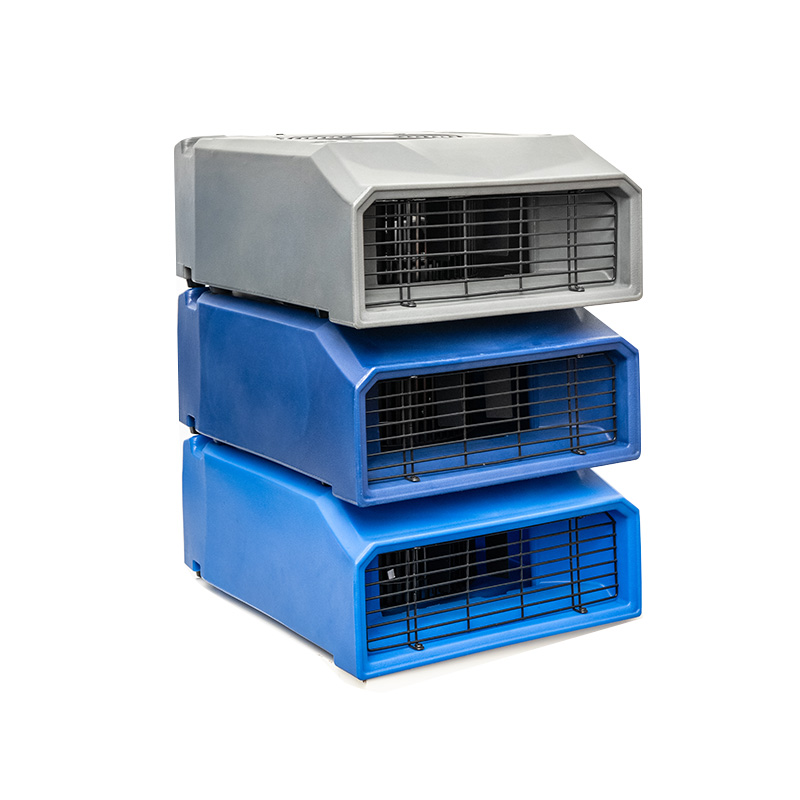
The AM-B01 High Air Volume Thin Carpet Dryers are equipped with a powerful motor that generates a high volume of airflow to ensure that your carpet dries thoroughly and quickly. This high air volume n...
See Details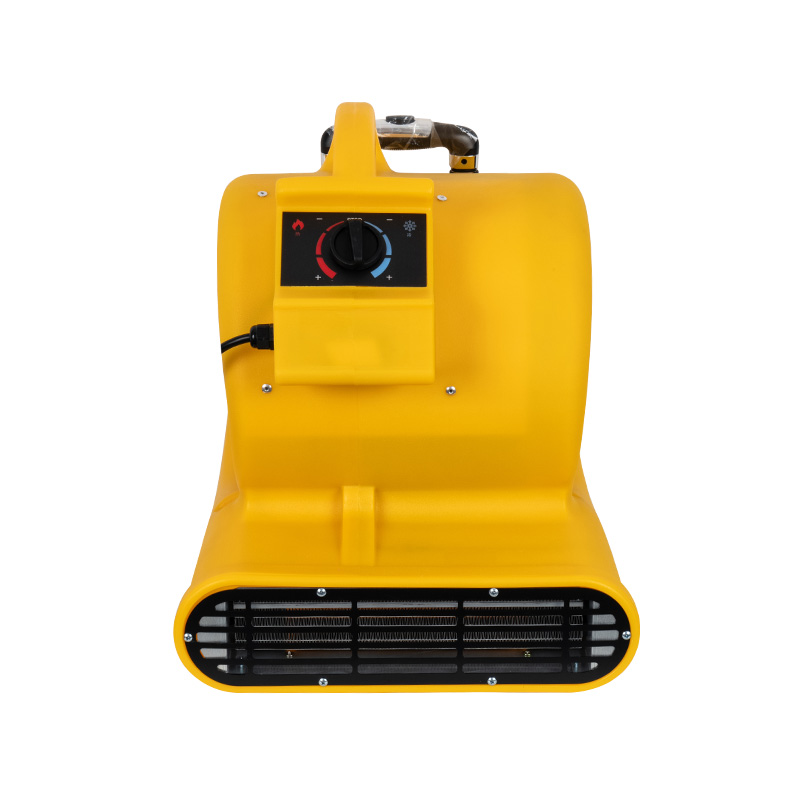
The AM-A01 Hot and Cold Carpet Drying Fans are versatile units designed to speed up the carpet drying process by utilizing hot and cold air. Combining the benefits of hot and cold air circulation, the...
See Details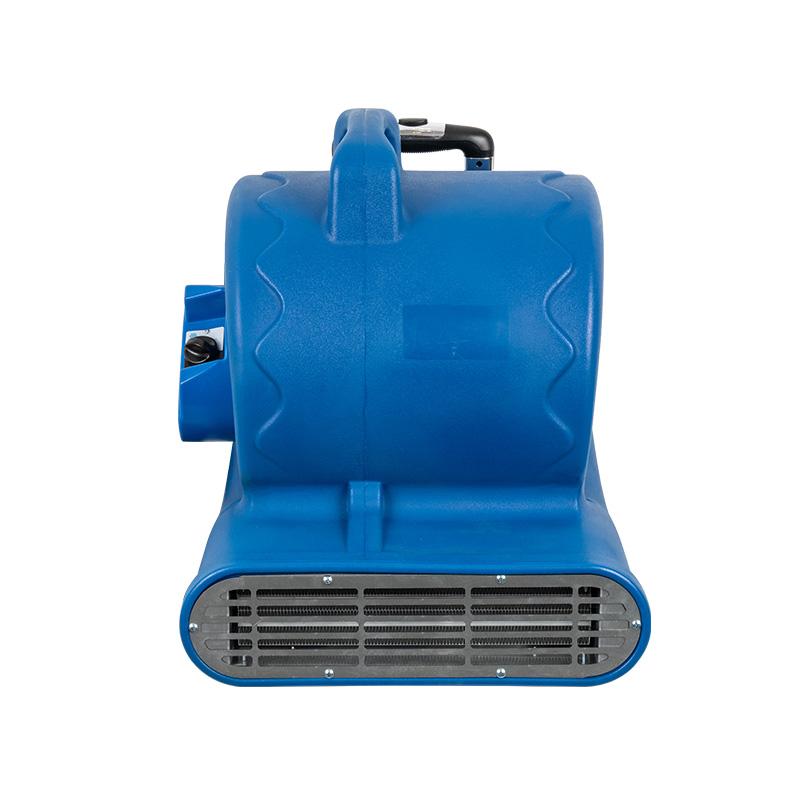
AM-A02 Multi-wing Centrifugal Wind Wheel Carpet Dryers effectively increase wind power and airflow for faster and more efficient carpet drying through the use of multi-wing centrifugal wind wheel tech...
See Details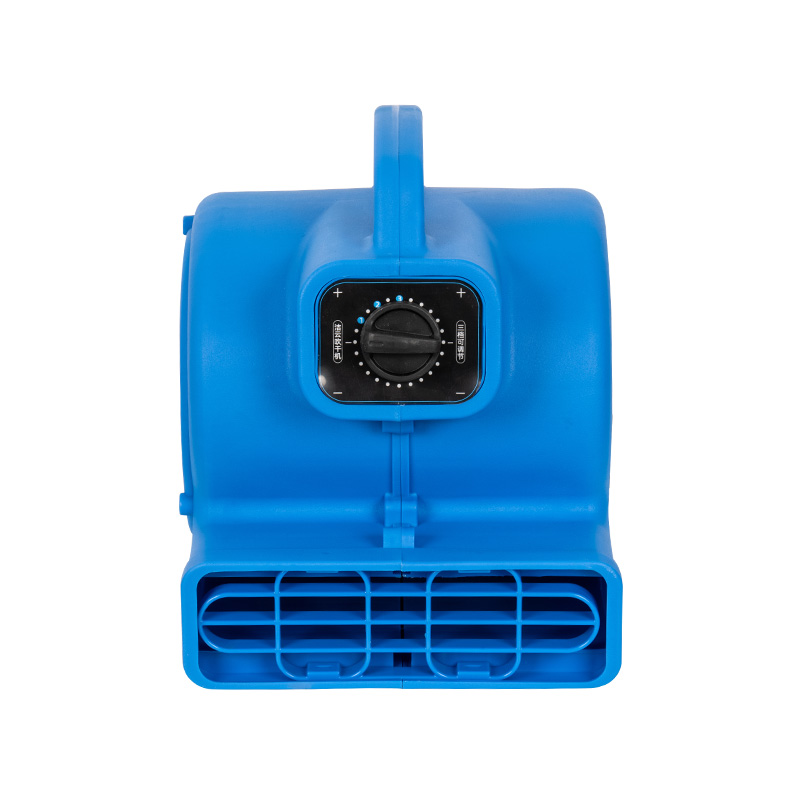
The AM-A03 Small Axial Floor Carpet Dryer is a highly efficient and versatile drying unit with a centrifugal air mover for faster surface drying. Not only is it suitable for drying carpets, floors, fu...
See Details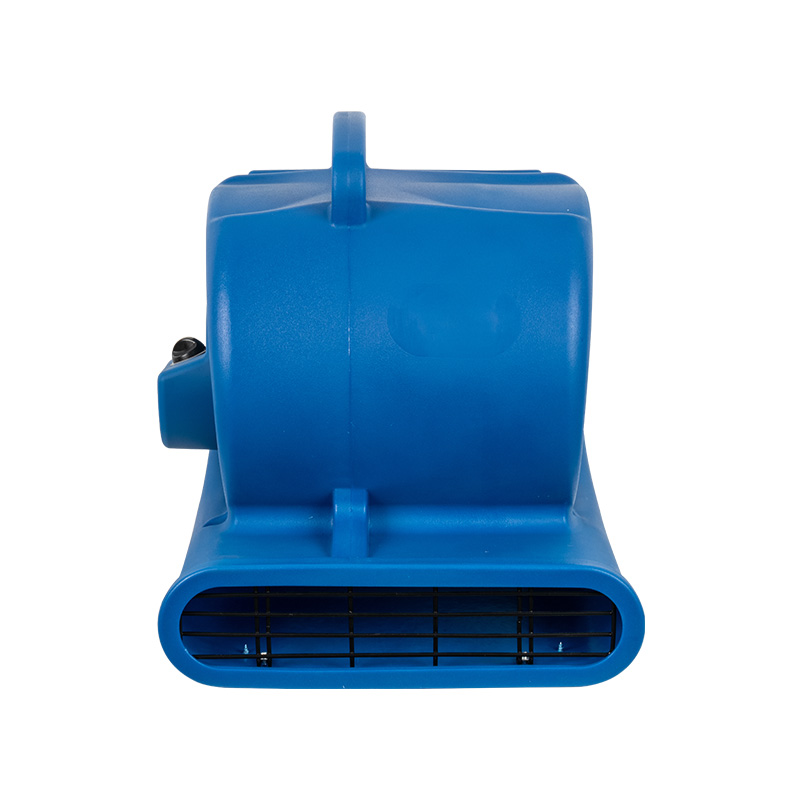
The AM-A04 Lightweight Portable Carpet Wall Floor Dryer features advanced centrifugal air movement technology for faster surface drying results. Not only is it suitable for a wide range of carpet, flo...
See DetailsStore Information
No. 88, Yuexin Road, Sanjiang Street, Shengzhou City, Shaoxing City, Zhejiang Province, China
+86-13819532379
Links
Products
Mobile Terminal
