
 English
 русский
 Deutsch
 Español

News
Home / News / Industry News / How to Dehumidify a Basement: Fix Causes, Size the Unit, Place It Right

Content
Walk into a basement with that familiar damp smell, touch a cold water pipe covered in beads of condensation, or notice a musty hint in the air, and you already know the relative humidity is higher than it should be. The reliable way to dry out a basement is not a single miracle product. It is a sequence: find where the moisture is coming from, eliminate what you can, then install a correctly sized dehumidifier with a continuous drain and let it run. If you follow that order, most basements can be held comfortably at 40 to 50 percent relative humidity, the range that protects wood, drywall, stored items and indoor air quality.
Basements are wetter than the rest of the house by design. Concrete is porous, and the soil around a foundation holds groundwater that continually pushes moisture vapor through the slab and walls. Add to that the air leakage path: warm, humid outdoor air enters through cracks, pipe penetrations, window wells and the rim joist, then hits cooler foundation surfaces and condenses into liquid water. The result is that basement humidity usually comes from several sources at once, which is why simply lowering the temperature or opening a window rarely solves it.
Understanding this matters because it changes your approach. If you only focus on running a dehumidifier while a gutter downspout is dumping water next to the foundation, you are paying to remove water that should have been diverted outside in the first place.
Before buying equipment, confirm there is actually a problem and set a target. The signs are usually visible before you need a meter:
On the health side, family members with allergies or asthma often notice worse symptoms indoors than outdoors, which can point to mold spores and dust mites thriving in high humidity. A simple digital hygrometer costs very little and gives you an accurate reading. The Environmental Protection Agency recommends keeping indoor relative humidity between 30 and 50 percent; for a basement, staying at or below 50 percent is realistic if the moisture sources are controlled. Anything consistently above 60 percent is an urgent sign, because mold growth accelerates quickly above that threshold.
The first investment is best spent outside the basement. Walk around the house after a rain and check the basics:
Improving ventilation can also help when the outdoor air is drier than the basement air. Open basement windows on cool, dry days, or run a fan to push humid air out. But be careful: on hot, muggy summer days, outdoor air can be more humid than the basement air, so ventilation then works against you.
Once the obvious sources are fixed, the dehumidifier becomes the workhorse. The biggest mistake homeowners make is buying a small portable unit rated for a bedroom and expecting it to dry a damp basement. Capacity is rated in pints per day, and the Association of Home Appliance Manufacturers (AHAM) sets the test method. Basements need a rating based on the floor area and the moisture condition:
| Basement Condition | Floor Area (sq ft) | Recommended Capacity (pints/day) |
|---|---|---|
| Damp, musty smell | 500 | 10 |
| Damp, musty smell | 1,000 | 14 |
| Wet, water stains | 500 | 14 |
| Wet, water stains | 1,000 | 18 |
| Very wet, seepage | 500 | 18 |
| Very wet, seepage | 1,000 | 22 |
When in doubt, size up by one step. A larger unit will cycle less often, use less energy overall, and recover faster after you open the basement door. Most basement dehumidifiers use a compressor, which works well in temperatures above about 18°C (65°F). If your basement sits below that range in cooler months, a desiccant model performs better because it does not rely on condensing coils that can frost over.
Equally important is the drain setup. The best choice is a unit that can empty itself continuously through a gravity hose to a floor drain. If no floor drain exists, choose a model with a condensate pump that can push water up to a sink or exterior outlet, as explained in our standing dehumidifier sizing and placement guide. Relying on a water bucket means checking it daily, and an overflowing bucket creates exactly the kind of moisture you are trying to remove.
For medium to large basements with heavy moisture loads, an industrial portable unit is a sensible fit, especially if the basement doubles as a workshop, laundry room, or rental space. It should offer continuous-drain flexibility, adjustable humidity targets, and enough capacity to recover quickly after heavy rain events.
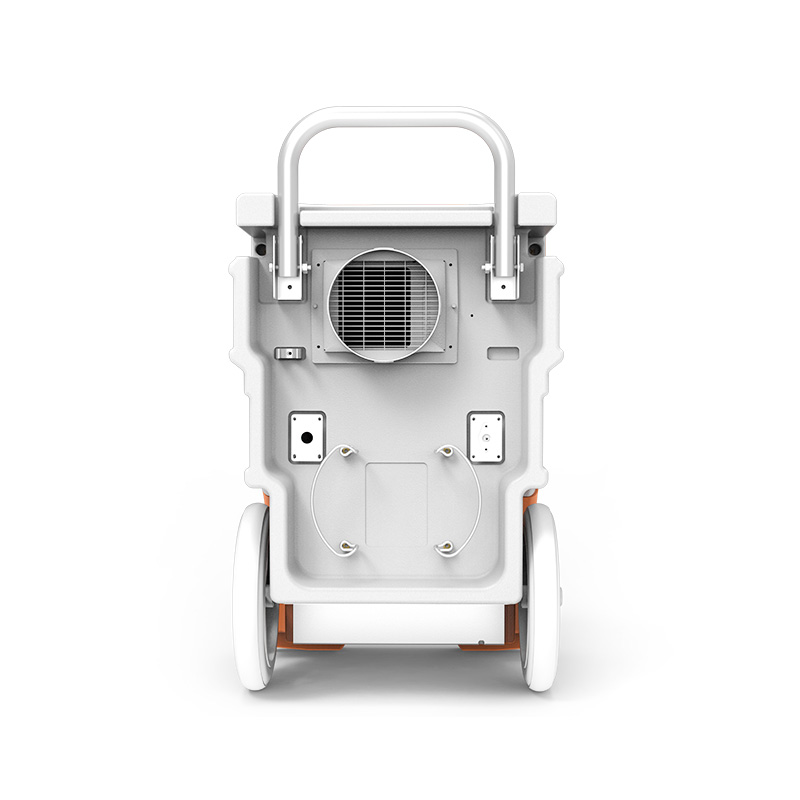 Industrial Portable Dehumidifier for Large BasementsThis high-capacity portable unit suits medium to large basements with heavy moisture loads, offering flexible drainage and adjustable humidity targets for rapid recovery after wet weather.View Product →
Placement is as important as capacity. A dehumidifier works by pulling air through its intake and across cold coils, so it needs room to breathe. Put the unit at least 30 cm away from walls and furniture, and place it in the most central or dampest area of the basement rather than in a corner. Elevating it on a sturdy stool or a concrete block keeps the intake above dust and debris, improves air circulation, and puts the drain hose in a better position for gravity flow.
Start with the humidity set point at 50 percent and let the machine run continuously for 48 hours. If the hygrometer still reads above 50 percent, lower the set point in 5-percent steps until it reaches the 40 percent range on the warmest days. Keep basement doors and windows closed while the dehumidifier runs, because the machine is working against the entire basement as one enclosed space. Clean or replace the air filter every month during peak season, and check the condensate hose for kinks or algae buildup.
A portable machine with wheels makes seasonal repositioning noticeably easier, especially if you also use it to dry a workshop or a crawlspace. The ability to move the unit to the dampest corner and direct the discharge airflow where it dries fastest is a practical advantage when the basement layout changes, such as after a washing machine overflow or during a renovation.
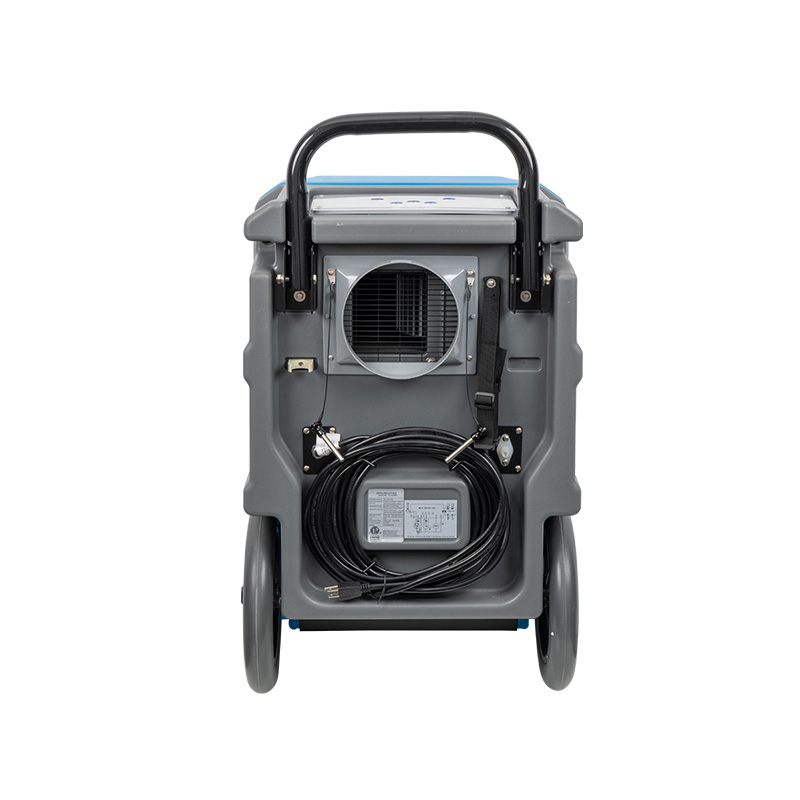 Wheeled Dehumidifier with Adjustable Humidity and TimerEasy to reposition with sturdy wheels and foldable handle, this unit lets you target damp corners, works efficiently in cold conditions, and can connect to ducting for larger areas.View Product →
You can read more about what a dehumidifier can realistically do in our article on whether a dehumidifier really removes humidity.
Compressor dehumidifiers lose efficiency as the air temperature drops. Below roughly 18°C (65°F), the condensing coils can frost over, and the machine spends energy defrosting itself instead of pulling moisture out of the air. This is a common reason a basement feels humid in winter even though a dehumidifier has been running all day. The practical solution is either a desiccant dehumidifier, which works across a wider temperature range, or a unit with an automatic defrost cycle that keeps the coils operational during low-temperature operation.
If you prefer a permanent installation and the basement is part of a ducted heating or ventilation system, a duct-mounted dehumidifier removes moisture from the air as it returns through the system, which keeps both the basement and the floor above at a stable humidity level. That approach requires more planning and installation work, but it removes the need to carry a portable tank or hose around seasonally.
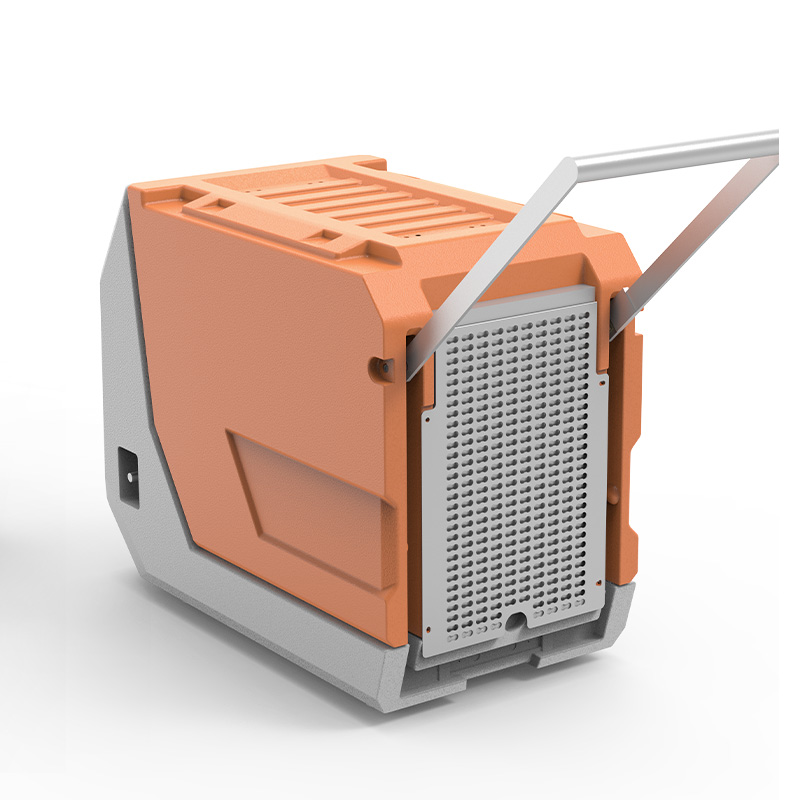 Ceiling-Mounted Duct Dehumidifier for Whole-Home IntegrationPermanently installed into ducted systems, this model stabilizes humidity in basements and upper floors without seasonal carrying, making it ideal for planned, central moisture control.View Product →
If you have done all of this and the relative humidity still stays above 60 percent, the moisture is almost certainly entering faster than any dehumidifier can remove it. Hidden leaks, groundwater pressure, or a broken sewer line are possibilities that need professional inspection. In that situation, spend the money on waterproofing or drainage work first; a dehumidifier is the right tool only after the structure itself is dry. In the meantime, keep the unit running at its lowest effective set point, check surfaces around the walls for moisture, and address the source before the problem spreads to framing and insulation.
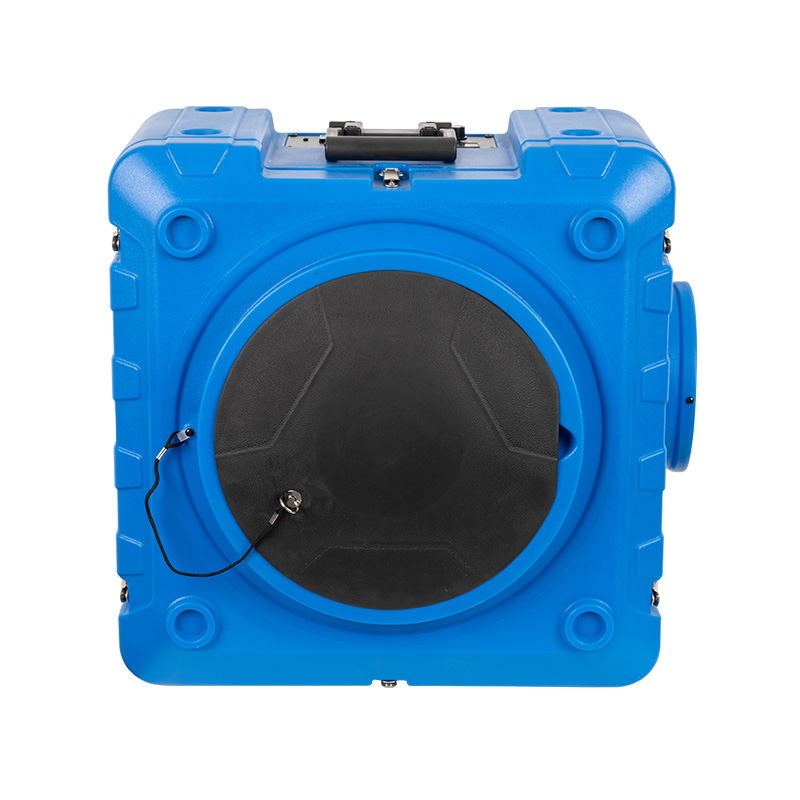
Three-Stage Filtration: The air scrubber features a three-stage filtration system that includes a pre-filter (MERV-10), carbon filter, and H13 HEPA filter. It effectively removes dust, pollen, smoke, ...
See Details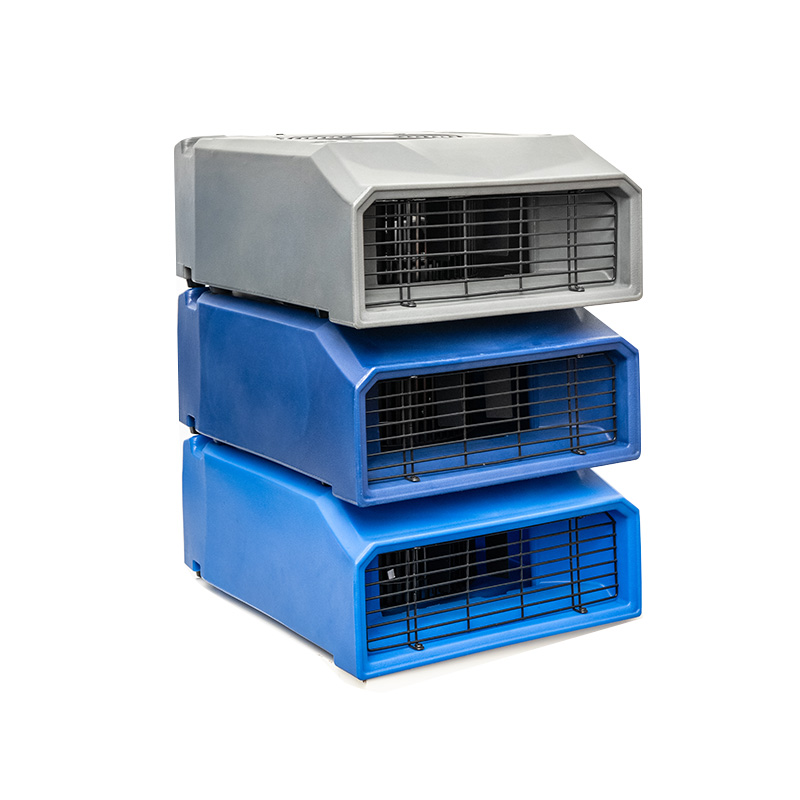
The AM-B01 High Air Volume Thin Carpet Dryers are equipped with a powerful motor that generates a high volume of airflow to ensure that your carpet dries thoroughly and quickly. This high air volume n...
See Details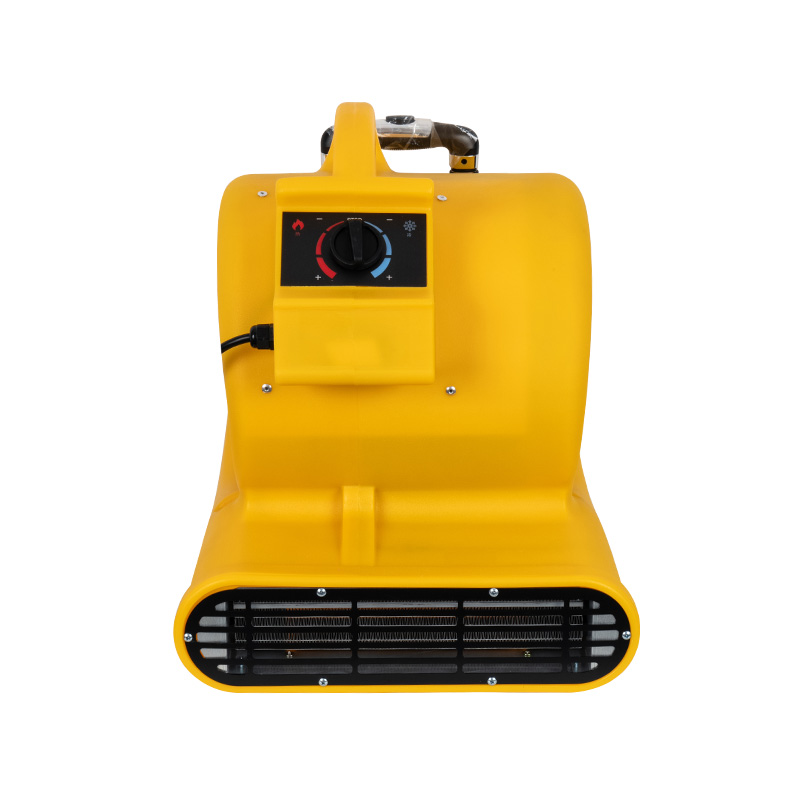
The AM-A01 Hot and Cold Carpet Drying Fans are versatile units designed to speed up the carpet drying process by utilizing hot and cold air. Combining the benefits of hot and cold air circulation, the...
See Details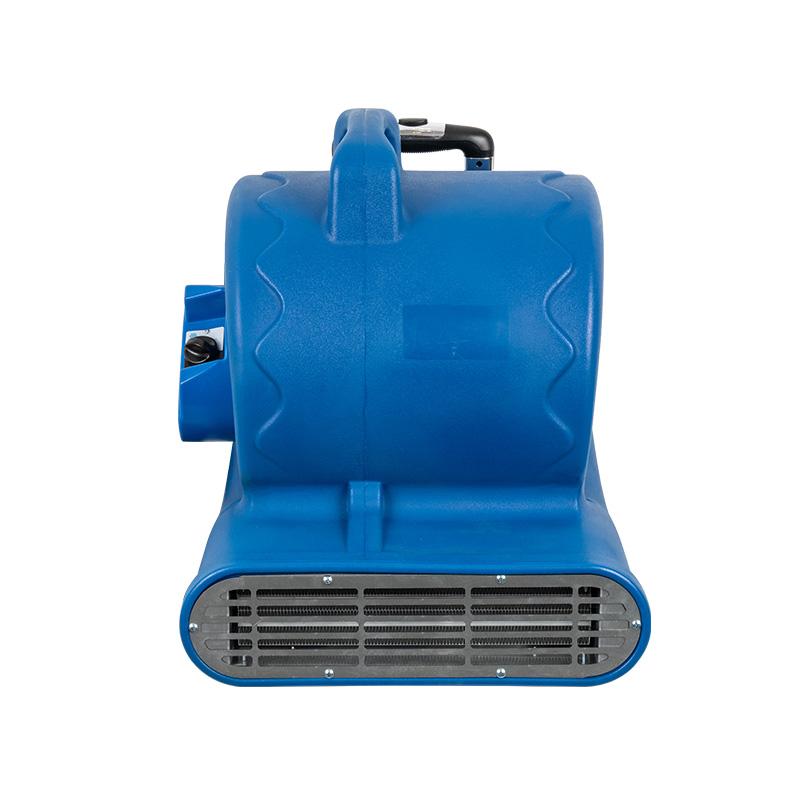
AM-A02 Multi-wing Centrifugal Wind Wheel Carpet Dryers effectively increase wind power and airflow for faster and more efficient carpet drying through the use of multi-wing centrifugal wind wheel tech...
See Details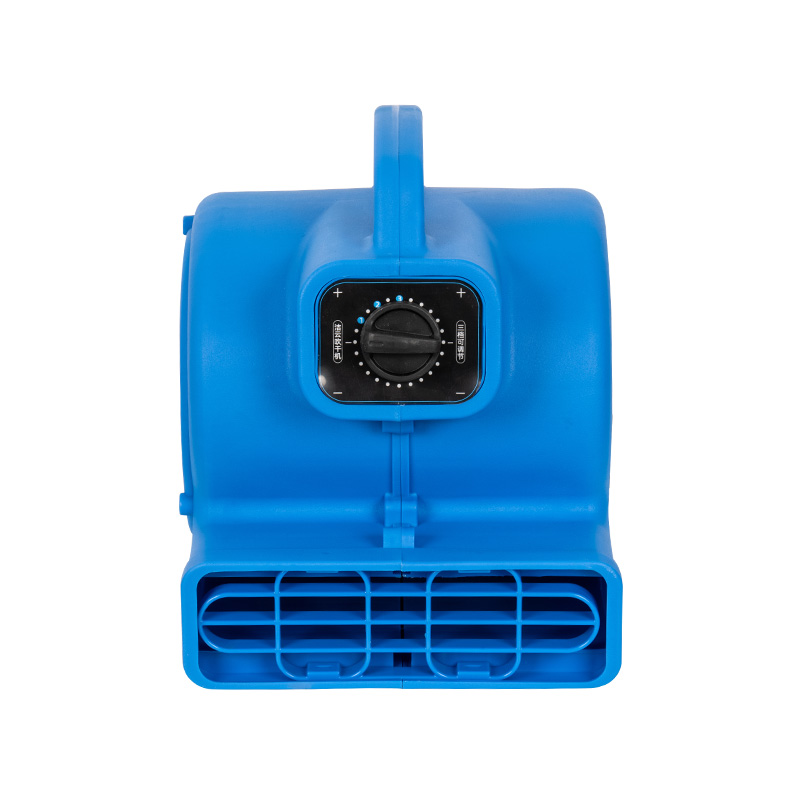
The AM-A03 Small Axial Floor Carpet Dryer is a highly efficient and versatile drying unit with a centrifugal air mover for faster surface drying. Not only is it suitable for drying carpets, floors, fu...
See Details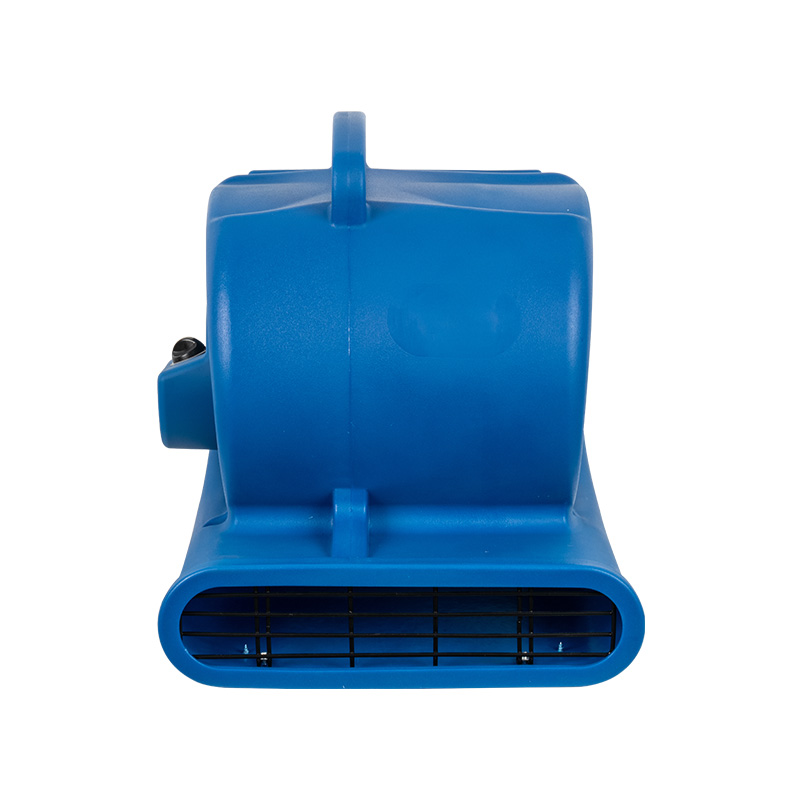
The AM-A04 Lightweight Portable Carpet Wall Floor Dryer features advanced centrifugal air movement technology for faster surface drying results. Not only is it suitable for a wide range of carpet, flo...
See DetailsStore Information
No. 88, Yuexin Road, Sanjiang Street, Shengzhou City, Shaoxing City, Zhejiang Province, China
+86-13819532379
Links
Products
Mobile Terminal
